Prior Authorization in Medical Billing: How the Process Works and Common Challenges
Table of Contents
- What Is Prior Authorization in Medical Billing?
- Why Is Prior Authorization Important in Healthcare?
- How Does the Prior Authorization Process Work?
- Prior Authorization Process Flow
- Prior Authorization Flow Chart: A Simple Overview
- Common Challenges in Prior Authorization
- How Providers Can Reduce Prior Authorization Delays
- When Providers Need Prior Authorization Support
- Conclusion
Prior authorizations may be among the most time-consuming activities in the healthcare revenue cycle. Before providing certain healthcare services, procedures, drugs, testing, or equipment, the healthcare provider may need authorization from the patient’s health insurance company. Incomplete authorization requests, late submissions, or sending requests through the wrong payer channel can cause complications.
Prior authorization in medical billing links medical decision-making and payment policies. Familiarity with prior authorization can help health care organizations improve documentation and ensure claims process smoothly.
What Is Prior Authorization in Medical Billing?
What is prior authorization in medical billing? It is the process of obtaining approval from a health insurance payer before providing a specific covered service or item. It is also commonly called preauthorization, precertification, or prior approval.
Payers may require prior authorizations for procedures like imaging studies, surgery, specialty procedures, prescription medications, durable medical equipment, or other costly services. Prior authorization requirements may vary by payer, plan, procedure, and even location.
Prior authorization generally enables the payer to determine whether the proposed procedure is covered and medically necessary. The prior authorization process can be challenging because it involves many steps. Prior authorization does not guarantee payment. Other factors may influence payments too.
Why Is Prior Authorization Important in Healthcare?
Prior authorization in healthcare affects both patient care and revenue cycle performance.
For providers, completing an authorization correctly before a scheduled service can reduce avoidable disruptions. For patients, timely authorization can help prevent unnecessary delays in receiving covered care.
The challenge is that authorization requirements vary. Different health plans can have different forms, documentation requirements, submission methods, and review procedures. CMS has identified payer-specific requirements and manual workflows as significant sources of administrative burden.
As a result, providers need a consistent process to identify authorization requirements and track requests from submission through final decision.
How Does the Prior Authorization Process Work?
Although the exact workflow varies by payer, a typical process includes several key stages.
1. Verify Insurance and Authorization Requirements
First, confirm the patient’s active coverage and determine whether the planned service requires prior authorization. Checking this before scheduling can help prevent last-minute delays.
2. Gather Required Information
The provider’s team collects the information the payer requests. Depending on the service, this may include patient details, diagnosis information, procedure or service codes, clinical notes, test results, treatment history, and other supporting documentation.
3. Submit the Authorization Request
Submit the request through the payer’s required channel. Depending on the plan, this may involve an electronic portal, electronic workflow, fax, or other submission method.
4. Payer Review
The payer reviews the request and supporting information against its applicable requirements. The payer may approve the request, deny it, or ask for additional information.
5. Track the Decision
The provider’s team should document the authorization status, authorization number, effective dates, approved service, units or visits when applicable, and any other relevant conditions.
6. Proceed With the Service
When approval is required and obtained, the provider can proceed according to the authorization terms and payer requirements. The provider should keep the authorization information for billing and for claim follow‑up.
Prior Authorization Process Flow
A simple prior authorization process flow can be summarized as:
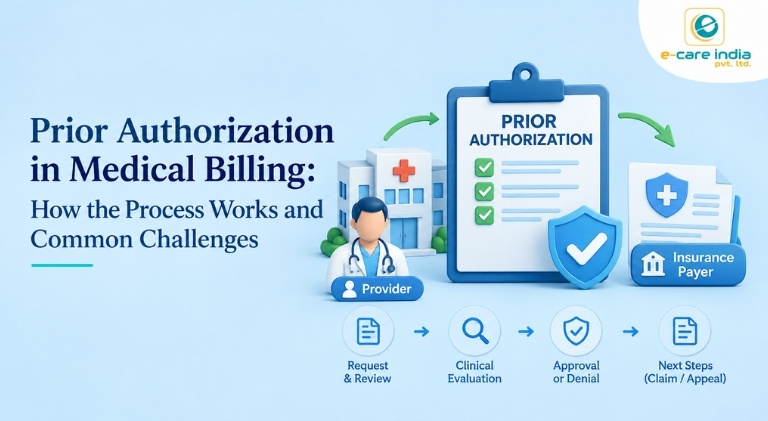
Insurance Verification → Check Authorization Requirement → Gather Clinical Documentation → Submit Request → Payer Review → Approval / Additional Information / Denial Management → Record Authorization Details → Provide Service → Submit Claim
This workflow highlights why authorization should not be treated as a single administrative task. Each stage can affect the next step in the revenue cycle.
Prior Authorization Flow Chart: A Simple Overview
A prior authorization flow chart can help billing, clinical, and administrative teams understand where delays are likely to occur.
Patient & Insurance Information → Identify Whether PA Is Required → Collect Clinical & Billing Documentation → Submit Request to Payer → Payer Review → Approved?
→ Yes: Record authorization details → Provide service → Submit claim
→ No: Review denial reason → Correct/appeal when appropriate → Track decision
→ More information needed: Submit requested documentation → Continue payer follow-up
Keeping this process visible to staff can make ownership clearer and reduce missed follow-ups.
Common Challenges in Prior Authorization
Even a well-organized authorization process can encounter obstacles.
Incomplete Documentation
Missing clinical notes, test results, diagnosis information, or other payer-required documentation can lead to requests for additional information and delay the decision.
Payer-Specific Requirements
One payer may require information that another payer does not. Requirements can also change over time, so staff should verify current guidelines rather than rely on outdated checklists.
Manual Submission and Follow-Up
Fax, telephone, and multiple payer portals can make authorization management difficult to track. CMS has noted that traditional workflows can consume substantial provider staff time.
Delayed Decisions
A pending authorization can affect scheduling and patient care. For certain CMS-regulated payers, current rules require decisions within specified timeframes, including up to 72 hours for expedited proposals and seven calendar days for standard requests, subject to applicable requirements.
Authorization and Claim Mismatches
Problems can also occur when the service eventually billed does not align with the approved authorization, such as differences in procedure, units, provider, location, or authorization dates.
How Providers Can Reduce Prior Authorization Delays
A proactive strategy can make the process more manageable:
- Check authorization requirements before scheduling services.
- Maintain payer-specific authorization checklists.
- Submit complete clinical and billing documentation.
- Track every request from submission through final decision.
- Record authorization numbers, dates, approved services, and applicable limits.
- Follow up on pending requests according to payer requirements.
- Review denial reasons carefully before resubmitting or appealing.
- Coordinate authorization information between clinical, scheduling, and billing teams.
- Use electronic prior authorization options when available.
The healthcare industry is also moving toward greater electronic integration. CMS says certain impacted health plans must implement Prior Authorization APIs beginning January 1, 2027, supporting more standardized electronic workflows.
When Providers Need Prior Authorization Support
Managing authorization requests internally can become challenging when a practice handles multiple specialties, payers, procedures, and documentation requirements.
An experienced revenue cycle management outsourcing support partner can help providers organize authorization-related workflows, monitor pending requests, coordinate documentation, and support follow-up. For organizations looking to improve this part of their revenue cycle, e-care India provides prior authorization support designed to help healthcare providers manage payer requirements and authorization workflows more efficiently.
Conclusion
Prior authorization in medical billing is not just about getting a payer to say yes. It includes checking requirements, ensuring all documents are correct, submitting the request properly, tracking the payer’s response, and making sure the approval matches the claim.
When healthcare organizations create a prior authorization process, they keep good records and follow up on every request to avoid unnecessary delays and reduce billing problems connected to authorizations. As electronic prior authorization continues to improve, providers who set up procedures now will be ready for a more connected revenue cycle in the future.
Frequently Asked Questions
What is prior authorization and why is it required in healthcare?
Prior authorization is the process of getting approval from a health insurance payer before providing certain medical services, treatments, medications, tests, or equipment. Payers may use it to evaluate coverage, medical necessity, or other plan requirements. The specific services requiring authorization vary by payer and health plan.
How to streamline authorization requests for faster approvals?
First, check the payer’s authorization requirements before you schedule the service. I recommend double‑checking the payer’s authorization requirements before you schedule the service because missing steps can delay approval. Next, gather billing documents. Then use the payer’s submission method for authorization. Keep a record of every authorization request. Follow up on any pending cases. Electronic workflows can also reduce steps where possible.
What are the types of authorization in medical billing?
Common types include authorization for procedures and surgeries, diagnostic imaging and testing, specialty medications, certain ongoing treatments, and durable medical equipment. Exact requirements depend on the patient’s insurance plan and the service requested.
Best practices for managing prior authorizations to prevent claim denials.
Verify authorization requirements early, submit complete and accurate information, maintain payer-specific checklists, document authorization numbers and validity dates, and ensure the authorized service matches what is ultimately provided and billed. Teams should also monitor pending requests and review denial reasons carefully so they can make appropriate corrections or appeals.